
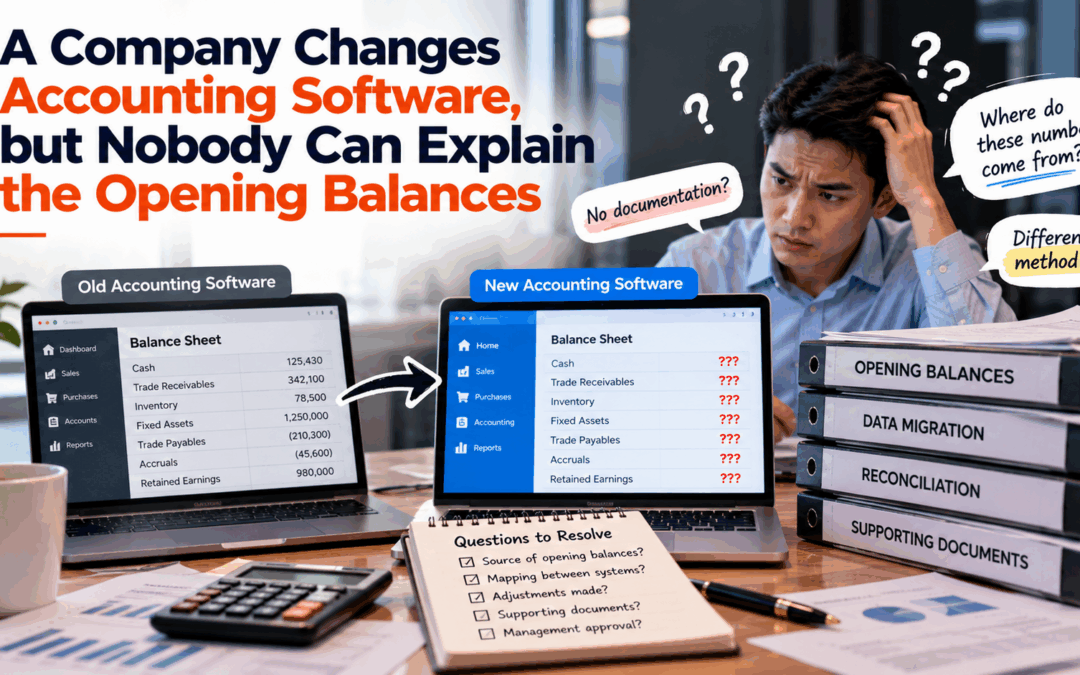
The new accounting software is running. Supplier invoices are being entered, customers are receiving statements, and the dashboard presents a clear view of sales and cash. The implementation appears complete until someone asks a basic question: where did the opening balances come from?
Finance can locate the imported figures, but the supporting details are incomplete. Customer balances do not agree with the old system, some supplier amounts appear twice, and a sizeable adjustment has been posted to an account labelled “migration difference.” The reports look organised, yet nobody can confidently explain the starting position.
Royal Premier PAC provides accounting, bookkeeping and management reporting services. For businesses changing systems, dependable reporting starts with balances that can be traced to reliable records. A successful transition needs more than a completed upload. It needs a documented explanation of what moved, how it was mapped and whether the new records agree with the approved source.
Define Which Date the Opening Balances Represent
Before investigating individual amounts, establish the migration date and what the opening balances are intended to represent. A company moving at the start of its financial year faces a different exercise from one changing systems halfway through a month.
The team should identify the final reporting date in the old system, the first transaction date in the new system and the treatment of activity around that boundary. Without a clear cut-off, transactions can be omitted or recorded twice.
For example, a supplier invoice might be included in the old system’s closing balance and then entered again in the new system because it remains unpaid. Alternatively, staff may assume that an invoice belongs in the old system while the migration team assumes it will be entered after the transition.
A written cut-off instruction gives everyone the same starting point. It should explain how late invoices, receipts, payments and adjustments relating to the earlier period will be handled.
Use an Approved Source, Not the Most Convenient Export
The opening figures should come from an identified and reviewed set of records. An export taken several weeks before migration may no longer reflect the final position if the finance team continued posting adjustments afterwards.
Save the source trial balance, relevant transaction listings and supporting schedules together. Record when the export was taken and whether further entries were made before the old period was closed.
If the old records contain unresolved differences, those issues should remain visible. Moving them into a new system does not resolve them, and combining them into one unexplained amount makes investigation harder.
Management should know which balances have been reconciled, which remain under review and what evidence is missing. That distinction allows the migration to proceed with a clear record of outstanding matters instead of presenting an uncertain starting position as fully verified.
Explain How Accounts Were Mapped
A new system may use a different chart of accounts. Several old expense accounts might be combined, while a broad balance sheet account may be split into more useful categories. These changes can improve reporting, but they also need an explanation.
Maintain a mapping schedule showing the destination of every relevant source account. Where a balance is divided, document the basis for the allocation. Where accounts are combined, preserve enough detail to trace the new total back to its components.
Consider an old account called “other receivables” containing employee advances, rental deposits and customer-related balances. Importing the total into a similarly broad account may preserve the arithmetic while retaining the original lack of clarity.
If management chooses to separate those items during migration, the supporting breakdown needs to justify the new balances. A change in account name should not conceal a change in classification or an unsupported adjustment.
Do Not Stop at a Balanced Trial Balance
A trial balance that adds up correctly is an important check, but it does not demonstrate that each figure is accurate. Equal debits and credits can still contain duplicate entries, incorrect classifications or unsupported balances.
Suppose a hypothetical company imports S$250,000 of trade receivables into the general ledger. The customer-level listing totals only S$230,000. The overall trial balance might still balance because another entry offsets the difference, but customer collections cannot be managed confidently from the incomplete listing.
The S$20,000 difference needs an explanation. It could relate to omitted customers, unapplied receipts, credit notes or an incorrect import setting. Posting an adjustment simply to force agreement would hide the question rather than answer it.
The same principle applies to supplier balances, inventory records and fixed assets. Review both the account total and the detailed records that support it.
Reconcile Customer and Supplier Details
For receivables, finance should be able to identify the invoices, credit notes and receipts making up each opening customer balance. Importing one total per customer may be convenient, but it can limit the team’s ability to explain statements and allocate subsequent payments.
Supplier balances need similar attention. A supplier statement can help investigate differences, although it must be reconciled with the company’s records rather than accepted without review. Payments in transit, missing credits and timing differences can affect the comparison.
Preserve invoice dates and due dates where they are needed for ageing reports. If every imported item receives the migration date, old overdue amounts may suddenly appear current. The report would then give management a misleading picture of collections or payment obligations.
Also check that the chosen import method does not duplicate the balance in the general ledger. Some systems generate accounting entries when outstanding invoices are loaded, so importing both the full control balance and the invoices without the appropriate process can create errors.
Rebuild the Bank Reconciliation at the Transition Date
The opening bank figure should connect to a completed reconciliation, not merely the balance shown on a bank statement. Outstanding payments and deposits can explain legitimate differences between the statement and the ledger.
Retain a list of those reconciling items and establish how they will clear in the new system. Otherwise, a payment already recorded before migration may be treated as a new expense when it appears in the bank feed afterwards.
Bank feeds introduce another boundary to manage. Confirm the date from which transactions are downloaded and compare that period with manually entered or imported activity. Overlap can produce duplicates that are easy to miss among routine receipts and payments.
The first reconciliation in the new system is therefore an important practical check. It should explain the movement from the opening position through the subsequent transactions, with old outstanding items remaining traceable until resolved.
Keep Supporting Schedules for Other Material Balances
Customer, supplier and bank records attract attention because they affect daily activity. Other opening balances can remain unexplained for longer, even though they influence the financial statements.
Fixed asset records should support the opening cost and accumulated depreciation figures. Loan balances should connect to relevant statements and reconciliations. Deposits, prepayments and accrued expenses need schedules showing what they represent and how they will be reviewed or cleared.
Inventory may require additional checks between quantities, values and the general ledger. A correct total does not necessarily mean the system holds the right quantities or costs for individual products.
Prioritise the balances that are material or operationally significant. For each one, identify the supporting record, the person responsible and any unresolved issue. This creates a manageable review process instead of a general instruction to “check everything.”
Investigate Migration Differences Before Clearing Them
A temporary migration account can help track differences during the implementation, but it should not become a permanent home for amounts nobody understands. Each entry needs a reason, supporting evidence and an owner.
Differences may arise from rounding, mapping mistakes, duplicate imports or transactions posted after the original export. Others may reveal problems that already existed in the old records.
These causes require different responses. A technical import error should be corrected through the appropriate migration process. A genuine accounting error needs assessment based on its nature, timing and significance. Posting everything to current expenses or retained earnings is not a substitute for that assessment.
Maintain a difference log showing the original issue, investigation, proposed correction and approval. The log provides a record of how the opening position became reliable and prevents the same question from being reopened without context.
Retain Access to the Evidence
The old system may contain attachments, transaction histories and approval records that are not transferred automatically. Cancelling access immediately after migration can leave the company with balances but little supporting evidence.
Before closing the old platform, identify what information has been exported and whether it can be read independently. Check a sample of documents to confirm that links and attachments remain usable.
The company should also establish how authorised staff will retrieve historical records. An archive stored under a former employee’s account or in an unfamiliar format may be technically available but practically inaccessible.
Royal Premier’s bookkeeping and accounting services can support the maintenance of financial records, but the business needs to preserve the source information that explains them. A readable archive and a clear filing structure help keep the transition from becoming a break in the company’s reporting history.
Assign Responsibility for the Final Review
Software providers, implementation consultants and internal finance staff may each complete their own tasks without anyone reviewing the entire opening position. A successful technical import does not necessarily mean the accounting reconciliation has been completed.
Name the person responsible for coordinating the final review. Their role should include collecting reconciliations, tracking unresolved differences and confirming that necessary corrections have been approved.
The review should also include operational checks. Can the team issue an accurate customer statement? Can it allocate a receipt to the right invoice? Does a supplier payment clear the expected items? These tasks help reveal problems that account totals alone may not show.
Management should receive a concise record of completed checks and remaining exceptions. Sign-off should reflect the evidence available, with unresolved matters clearly described rather than hidden behind a general statement that the migration is finished.
Use the First Reporting Cycle to Confirm the Position
The first month-end close after migration provides another opportunity to test the opening balances. Unexpected movements, unusual margins or balances that do not clear as expected may point to errors in the starting data or subsequent processing.
Compare the new reports with the approved opening schedules and explain significant differences. Where report formats have changed, confirm that the comparison uses equivalent accounts and definitions.
Royal Premier PAC’s management reporting services include financial analyses, variance reports and forecasts. Reliable opening figures give those reports a stronger foundation and help management distinguish business changes from migration problems.
A new system can improve the way a company works, but confidence comes from traceable records. Before treating the transition as complete, ensure that material opening balances have supporting detail, differences have been investigated and responsibility is clear. The business should be able to explain its starting position before relying on the results that follow.
Recent Comments