
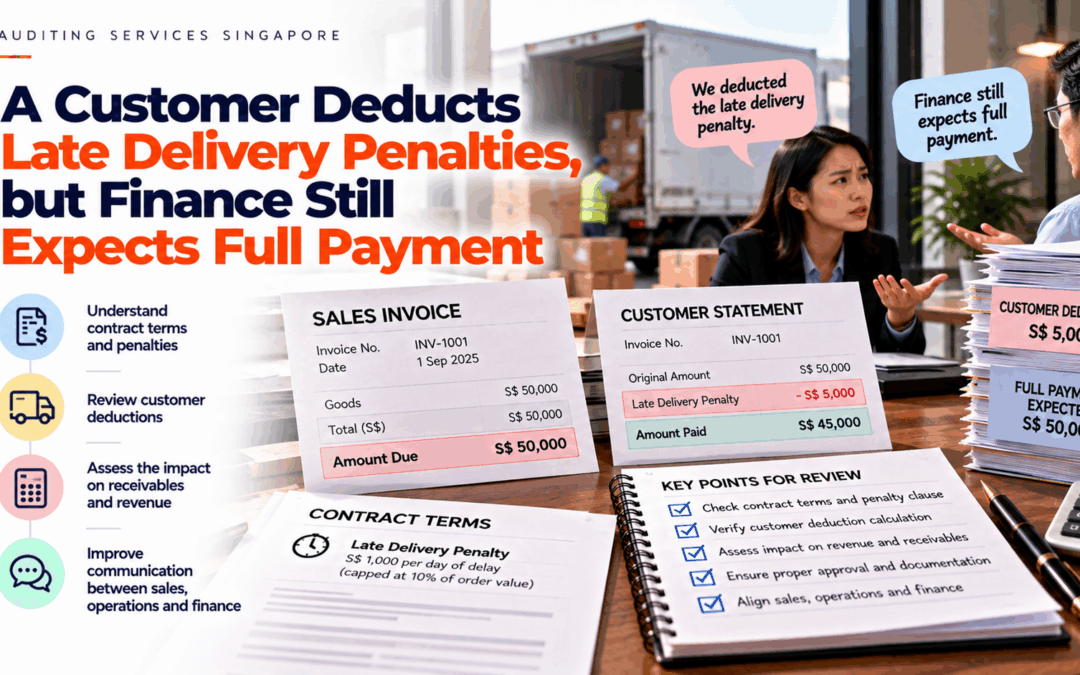
The payment arrives, but it is smaller than the invoice. The customer’s remittance advice explains that a deduction has been made for late delivery. Operations knows the shipment missed its scheduled arrival, sales believes the customer will withdraw the claim, and finance continues showing the difference as an overdue receivable.
Weeks pass without a clear decision. Collection reminders go out, the customer repeats its position, and the cash forecast continues to include an amount that may never arrive. The problem is no longer confined to a delayed shipment. It now affects the reliability of the company’s accounts and its understanding of the customer relationship.
Royal Premier PAC provides accounting and management reporting services that are relevant to keeping these differences visible. For management, the starting point is to establish what happened, what the customer is entitled to deduct and how the outstanding amount should be reflected in financial reporting.
Understand the Deduction Before Chasing the Balance
A short payment does not explain itself. The customer may have deducted a contractual charge, claimed compensation for disruption or applied a commercial concession discussed with the account manager. It may also have made an error or deducted an amount relating to another invoice.
Finance should obtain the remittance advice and the customer’s calculation before issuing repeated demands for payment. Match the deduction to the relevant order, delivery and invoice. Confirm whether the customer considers the matter settled or expects further discussion.
This first review prevents the company from treating every difference as an ordinary collection delay. An invoice awaiting routine payment needs a different response from a balance the customer explicitly disputes. Both may appear overdue in the ledger, but the next action and expected cash outcome can be quite different.
Reconstruct the Delivery Timeline
The original promised date is only part of the evidence. The customer may have changed the order, delayed an approval or requested a different delivery location. The company may have agreed to a revised schedule without updating its central records.
Bring together the purchase order, order acknowledgement, correspondence, dispatch records and proof of delivery. Where deliveries occurred in stages, identify which items arrived late and which arrived on time. A deduction calculated against the whole order may need closer examination if only one portion was delayed.
The purpose is to create an agreed factual timeline. Operations should explain the events, while sales contributes the customer discussions that affected expectations. Finance can then assess the amount using evidence rather than relying on competing recollections from different departments.
Read the Relevant Terms Carefully
A customer’s description of a deduction as a “penalty” does not establish whether the calculation is correct or enforceable. The relevant agreement may specify a rate, maximum amount, grace period or notification procedure. It may also distinguish delivery to a warehouse from acceptance at the customer’s site.
Compare the claim with the applicable terms and any subsequent changes agreed between the parties. Check the period used in the calculation and whether the amount relates to the affected goods or the entire contract. If the contractual position is significant or unclear, obtain appropriate legal advice.
Management should avoid assuming either that every customer deduction is valid or that it can be ignored until formally accepted. The company needs a documented position that considers the agreement, the facts and the available correspondence. That position provides the basis for negotiations and the accounting review.
Separate a Pricing Adjustment From a Collection Problem
A delivery-related deduction may affect the amount the company is entitled to earn from the transaction. A customer’s inability to pay an otherwise valid debt raises a different issue. Labelling both situations as bad debts can hide the underlying cause.
Under the revenue framework, contractual penalties linked to performance may affect the transaction price as variable consideration. A separate claim for damages may require a different assessment. Where the company remains entitled to a receivable but collection is uncertain, the applicable credit-loss requirements need consideration.
These distinctions matter because revenue adjustments, credit losses and other claims do not necessarily receive the same accounting treatment. Finance should assess the substance of the arrangement under the company’s reporting framework. The customer’s label, or the absence of an internally approved credit note, does not settle that assessment.
Make the Effect on Profit Visible
Consider a hypothetical distributor that invoices S$100,000 for an order with recorded product costs of S$78,000. Before considering delivery-related adjustments, the order shows a gross profit of S$22,000. The customer pays S$92,000 and deducts S$8,000 for late delivery. These figures exclude GST for simplicity.
Assume the company’s review establishes that the S$8,000 is a valid contractual reduction in the transaction price and should be recognised accordingly. Revenue would reduce to S$92,000 and gross profit to S$14,000, assuming the product costs remain unchanged. The deduction has absorbed more than a third of the originally reported gross profit.
This example illustrates why the issue deserves attention beyond the collection report. If finance continues showing the original margin without assessing the deduction, management may overestimate the profitability of the order. Conversely, accepting an unsupported deduction automatically could understate the company’s position. The evidence must drive the conclusion.
Assign Responsibility for Resolving the Dispute
A deduction can remain open because each department owns only part of the problem. Operations explains the delay, sales negotiates with the customer and finance maintains the receivable. Without a coordinator, everyone may believe the matter is progressing while no decision is reached.
Assign a named person to bring the information together and manage the response. Record the amount claimed, the company’s position, the evidence still needed and the next action date. Significant concessions should follow the company’s approval process rather than being agreed informally to end an uncomfortable conversation.
Finance should participate early enough to understand the likely outcome and reporting implications. Its role should extend beyond recording the final settlement after the commercial team has finished negotiating. Timely involvement helps keep the accounts and cash forecast aligned with developments.
Update the Cash Forecast Before the Dispute Is Settled
The ledger may show the full outstanding balance while the collection outcome remains uncertain. That does not justify including the entire amount as a confirmed receipt in next week’s cash forecast. Management needs a realistic view of what is likely to arrive and when.
Separate the undisputed amount from the deduction under discussion. If the customer has already paid everything except the claimed penalty, identify what evidence supports any further expected receipt. A salesperson’s intention to call the customer is not equivalent to an agreed payment date.
Where uncertainty is material, show alternative outcomes and their effect on cash availability. The accounting carrying amount and operational cash forecast serve different purposes, but both should use current information. This is particularly important when expected customer receipts are being used to plan payroll, supplier payments or loan instalments.
Keep Disputed Amounts Visible in Management Reports
A standard receivables ageing report may show only how long an invoice has been outstanding. It may not distinguish delivery disputes from administrative delays or customers experiencing financial difficulty. That makes it harder to identify which balances need commercial action.
Add a dispute schedule that links each deduction to the original invoice and responsible manager. Include the claim date, reason, amount, current assessment and expected resolution. Retain the history so that moving an item between internal reports does not make an old dispute appear new.
Royal Premier’s accounting services include management reporting and account reconciliations. A discussion about these services can address how unresolved customer deductions are presented to management alongside ordinary collection information. The aim is to give decision-makers a clearer view of the issues requiring attention.
Review the Customer’s Profitability Beyond the Invoice
Recurring delivery deductions may reveal a wider commercial problem. An account can generate substantial sales while consuming margin through expedited transport, additional handling, replacement shipments and repeated claims. Looking only at invoice value can conceal those costs.
Review the pattern across several orders. Identify whether the company repeatedly accepts delivery dates it cannot reliably meet, whether order changes arrive too late or whether stock shortages create preventable delays. Include relevant additional costs without counting amounts already included elsewhere twice.
The response may involve changing order cut-off times, agreeing more realistic lead times or revising the service offered. It may also require better internal execution. Management should understand the cause before deciding that the customer is unprofitable or that every claim should be accepted to protect future sales.
Assess Any Recovery From a Carrier Separately
The company may believe its transport provider caused the delay and should reimburse the customer deduction. That possibility can be worth pursuing, but it should not delay the assessment of the customer balance or be treated as guaranteed compensation.
The carrier’s agreement may contain different liability limits, claim deadlines or exclusions. A customer’s S$8,000 deduction does not automatically create an equivalent right to recover S$8,000 from the carrier. Keep the supporting delivery records and submit any claim through the appropriate process.
Track the carrier claim separately from the customer dispute and assess its accounting treatment on its own facts. Management should be able to see the amount lost or disputed with the customer, the amount sought from the carrier and the evidence supporting each position. Combining them prematurely can obscure the company’s actual exposure.
Document the Settlement and Clear the Correct Balance
Once agreement is reached, record precisely which invoice and claim it covers. The settlement may involve withdrawing the deduction, accepting a reduced amount or applying an agreed adjustment. Avoid closing unrelated items simply because the customer makes a later lump-sum payment.
Finance should match the settlement documents, credit notes where appropriate and cash receipts to the original outstanding amount. Check that any earlier estimates or allowances are updated consistently so that the same reduction is not recognised twice.
Keep the approval and supporting explanation accessible for subsequent reviews. If the matter remains unresolved at a reporting date, management still needs to assess it using the available evidence. Leaving the balance unchanged solely because negotiations continue is not a substitute for that review.
Connect Delivery Performance With Financial Reporting
A late delivery deduction should prompt a coordinated response across operations, sales and finance. The company needs to establish the facts, understand its contractual position and assess what the transaction means for revenue, receivables and cash. Each part contributes to a more reliable view of the outcome.
The longer those responsibilities remain disconnected, the easier it becomes for a disputed amount to survive in the accounts as an expected payment. A clear owner, supporting records and regular review help management resolve the issue and identify whether similar deductions are likely to recur.
If customer deductions keep appearing in overdue balances without a clear explanation, discuss the reporting and reconciliation process with Royal Premier PAC. Bring the relevant contracts, invoices, payment details and correspondence so that the accounting issues can be reviewed and management can make informed decisions about collection, settlement and future trading terms.
Recent Comments